CASE STUDY - WIPGRAZING THE COMMONS
WORK IN PROGRESSFrom Practice to Program
Challenge
Sarah Keiser spent most of a decade building community grazing cooperatives one by one, a side project alongside her full-time job, and a grassroots answer to fire hazard, weed management, and land stewardship. In 2023, the model found its foothold with Petaluma, a climate-ready, ag-centric town whose land dollars were split across the county, fire department, parks, and water districts, with no shared way to fund local graziers. The task: build a master plan for the City of Petaluma that would show the way forward and double as a resource for other municipalities.
Approach
Sarah supplied the raw material: everything she knew about the program, its parts, and its partners. My role was to articulate it: naming the program, breaking the why, who, what, and how into phases, and distilling it into the E² model (economy and ecology), the framework that gave her practice a single, repeatable shape. Sarah verified each stage for accuracy. I brought on Nicole Lavelle as project partner for visual identity and design. We designed every asset for two audiences: a skimmable version and a detailed version for implementation.
Outcome
The Petaluma Master Grazing Plan works as Petaluma's roadmap, a report for funders, and a resource for other municipalities. Grazing the Commons is now in some stage of adoption in four Sonoma County municipalities: Santa Rosa, Healdsburg, Cloverdale, and Rohnert Park.
This case demonstrates how to make a complex program memorable and easier for its founder to maintain, turning Sarah's side project into a service municipalities can access with less onboarding.
From Ad Hoc Projects to a Common Framework, Language, and Body of Learning
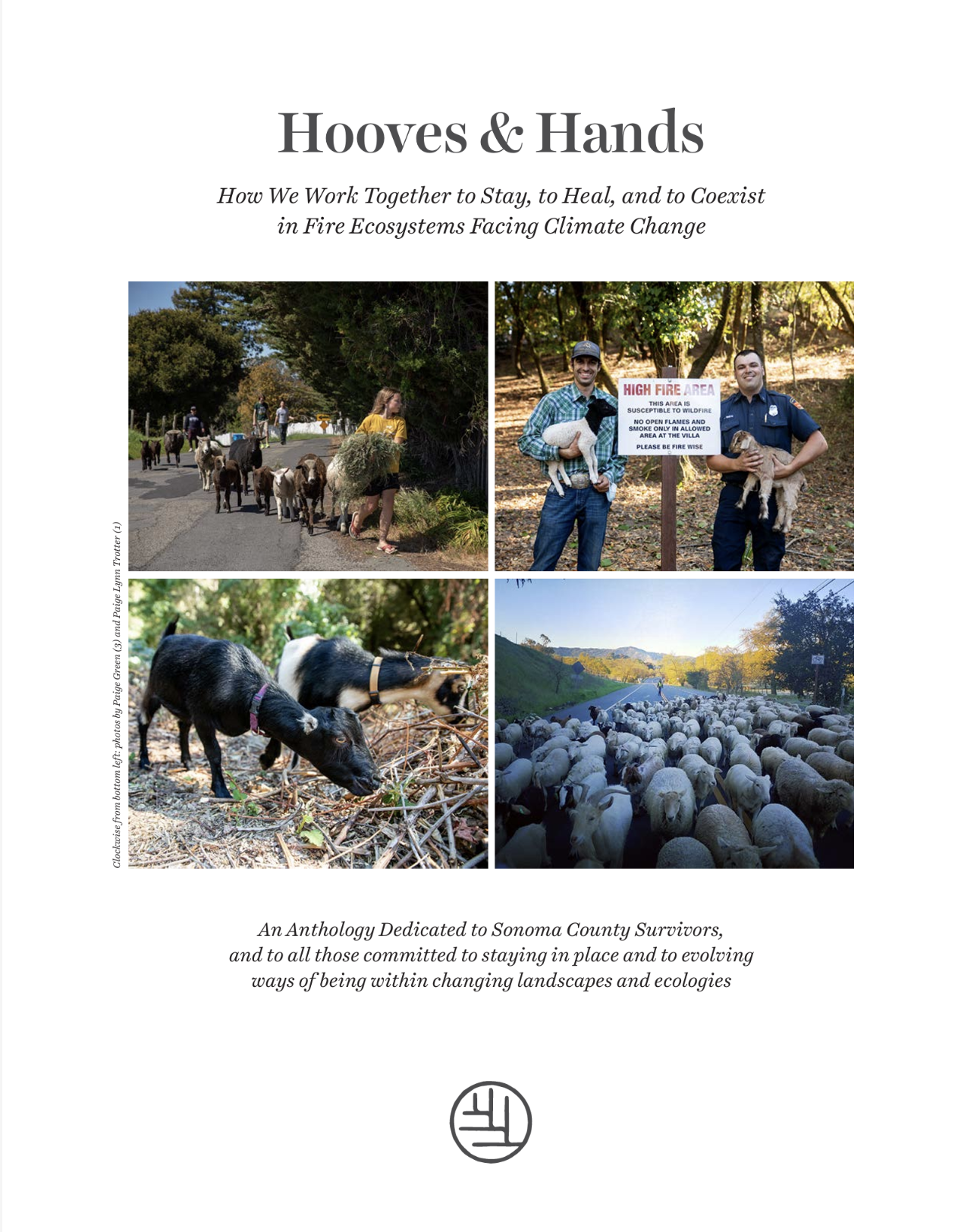
BEFOREApril 2022 - Hoofs & Hands
Anthology of stories featuring grazing cooperatives and educational outreach to help manage fire ecosystems and build resilient landscapes in the face of climate change. Created in partnership with fiscal sponsor Fibershed to report on their response to the Sonoma wildfires.
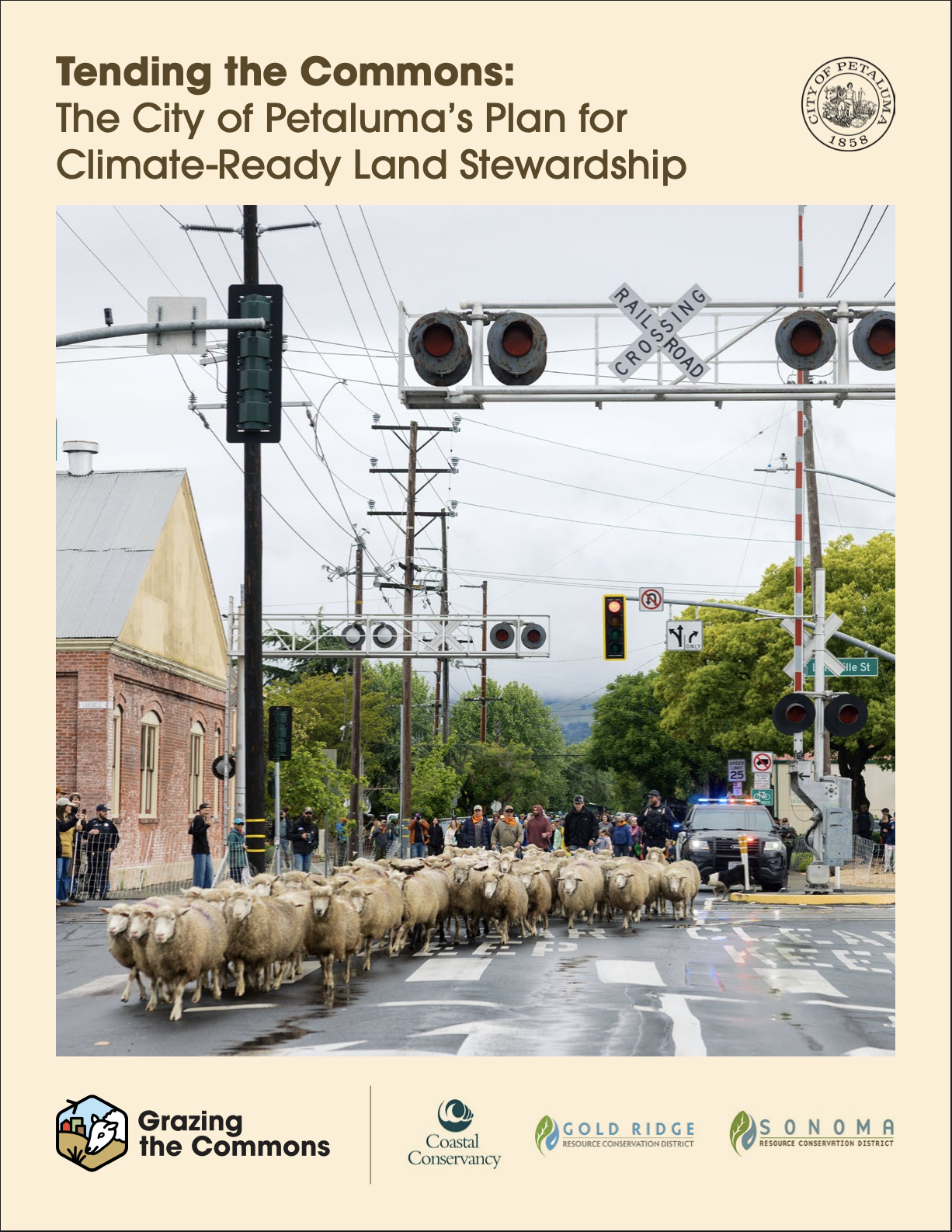
July 2026 - Tending the Commons:
The Petaluma Master Grazing Plan, published and shared with the City of Petaluma, maps the program's model, roles, partnerships, and strategic plan for the city to implement.
Fall 2026 - Quickstart Toolkit
A modular resource set for municipalities onboarding their own teams, agencies, communications staff, and citizens, built from the best examples across all participating municipalities. (work in progress)
AFTERPROJECT PARTNERS: Sarah Kieser, Nicole Lavelle Design, Paige Green Photography
Key Outcomes:
Naming and Brand Development:
The municipal-led grazing projects needed a unifying name and a program description that matched the scale of their aspiration. Grazing the Commons was chosen from a slate of options for its double meaning: literally, the commons, land historically managed for shared public use, and by extension, the common good, common goals, and a municipality's responsibility to it. The name works twice, as brand and as argument, making the case for collective management. Nicole Lavelle Design created a logo and visual treatment for the new brand and page on Sarah’s website, wildoathollow.com
Distilling Complexity into a Memorable Model:
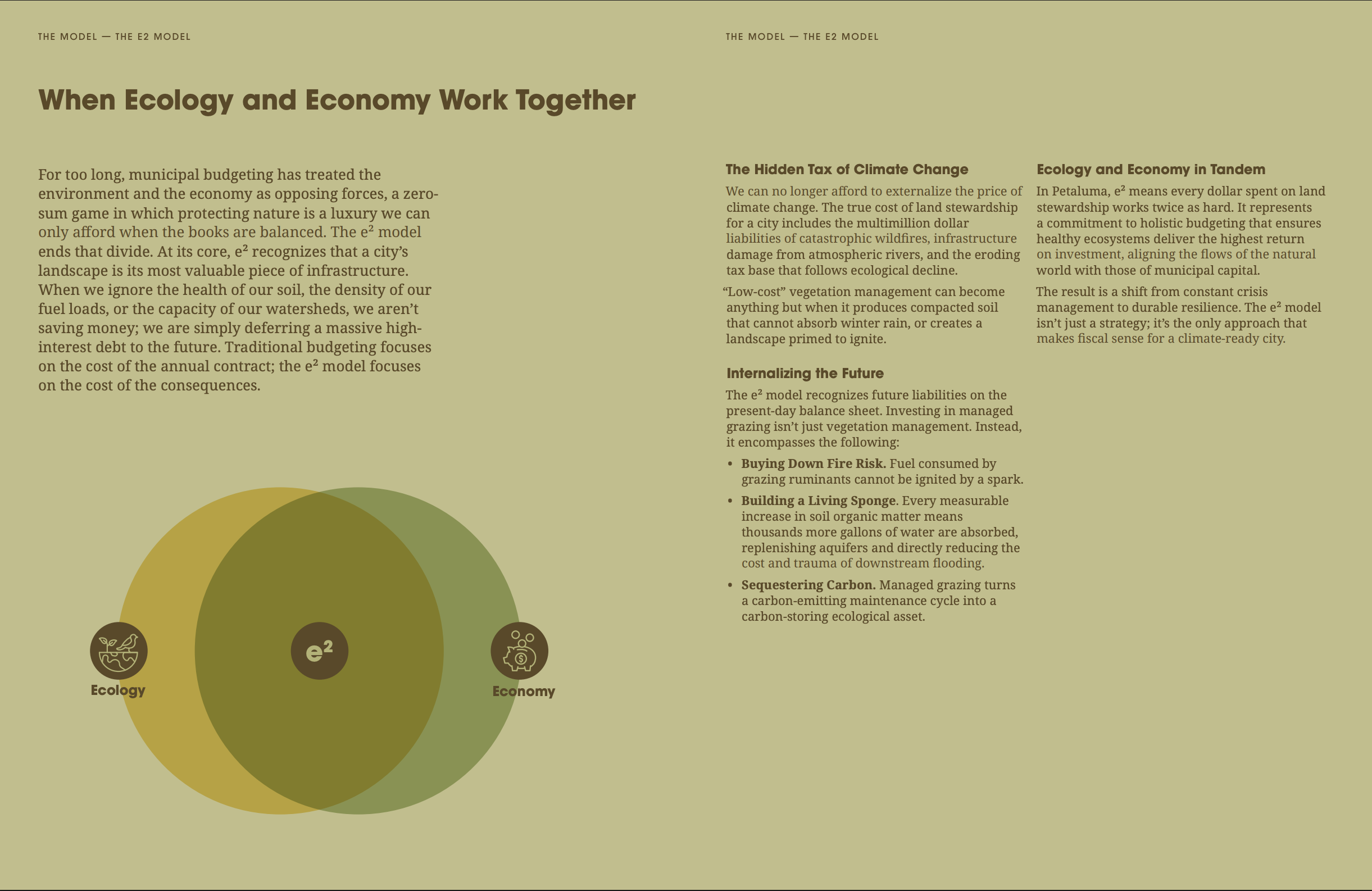
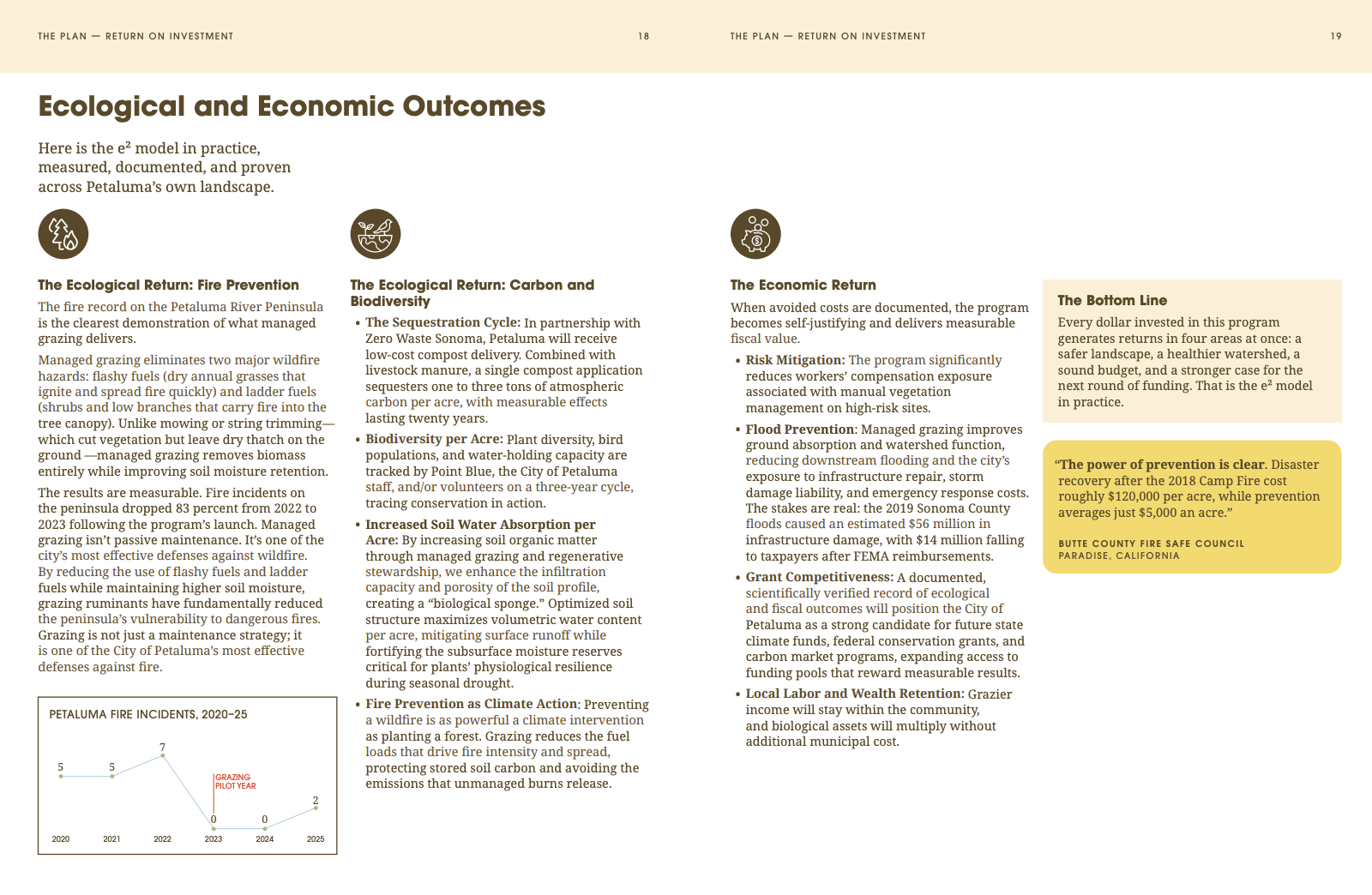
Years of program detail, funding structures, roles, and partnerships needed a concept simple enough to say out loud and remember. Distilling all of it into the E² model, economy and ecology, gave people a shorthand for the whole idea, no need to unpack it each time.
Visual structure built for retention: the layout was designed to reinforce the E² model, with one side of each spread for “economy” and the other for “ecology.” Content was written in the same parallel structure, so the pairing repeats in both what's said and how it's laid out, wherever possible throughout the report.
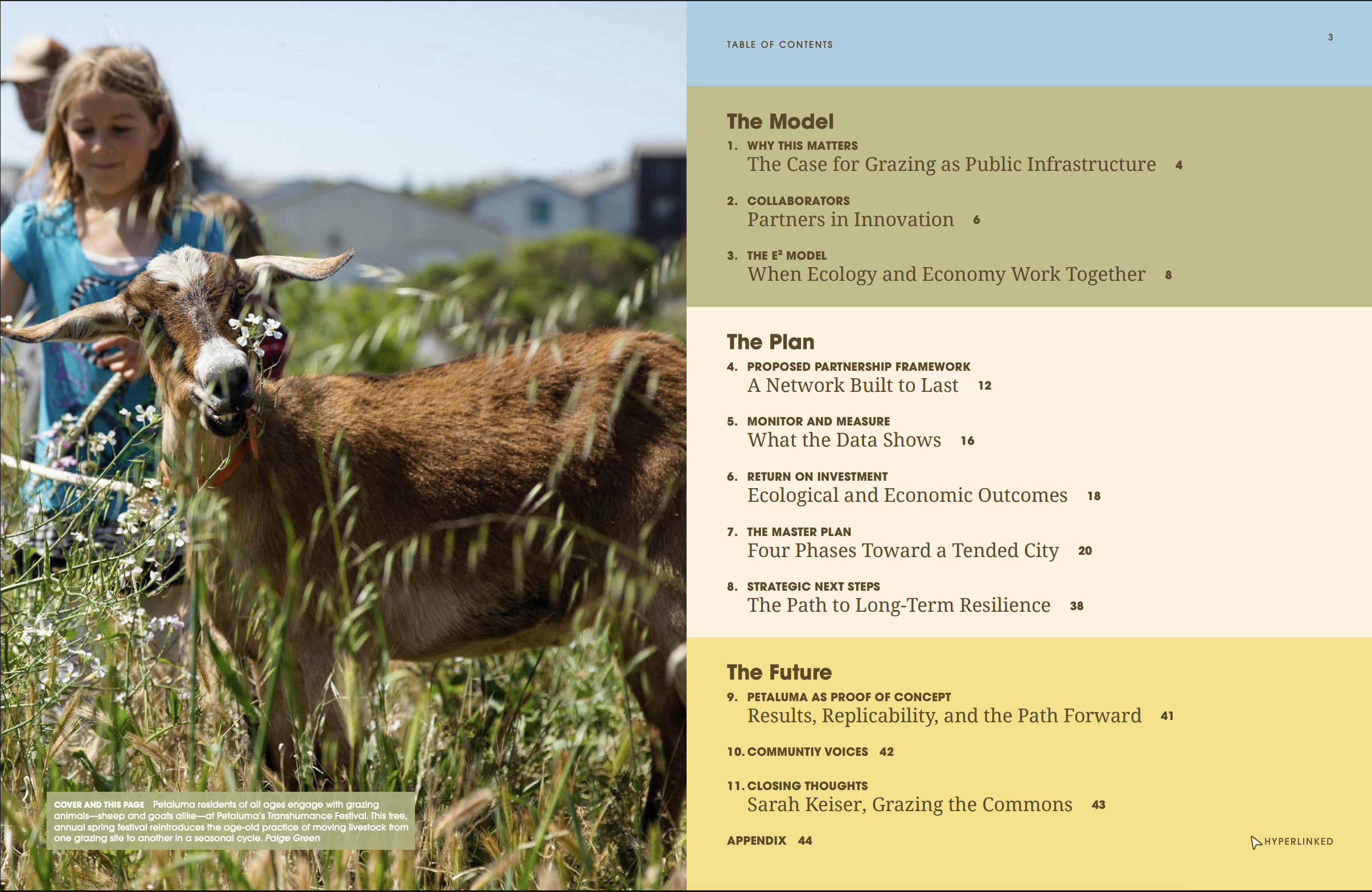
Table of Contents as Wayfinding:
The section titles break the multi-year project into digestible chunks instead of one dense document (past, present, and future, the E² model, and the network of program partners available to each municipality). The structure follows instructional design principles: sequencing complexity, pacing information, and chunking content so it's easier for readers to retain and explain to others
Content and Toolkit:
A quick-start guide for municipalities onboarding their own teams, agencies, communications staff, leadership, and citizens is the last component of this engagement. Samples, templates, and ready-to-use content, community outreach materials, onboarding guides, social media content, signage, flyers, and newsletters, built from the best examples across all participating municipalities and held in common so no municipality has to start from scratch.